%402x.svg)
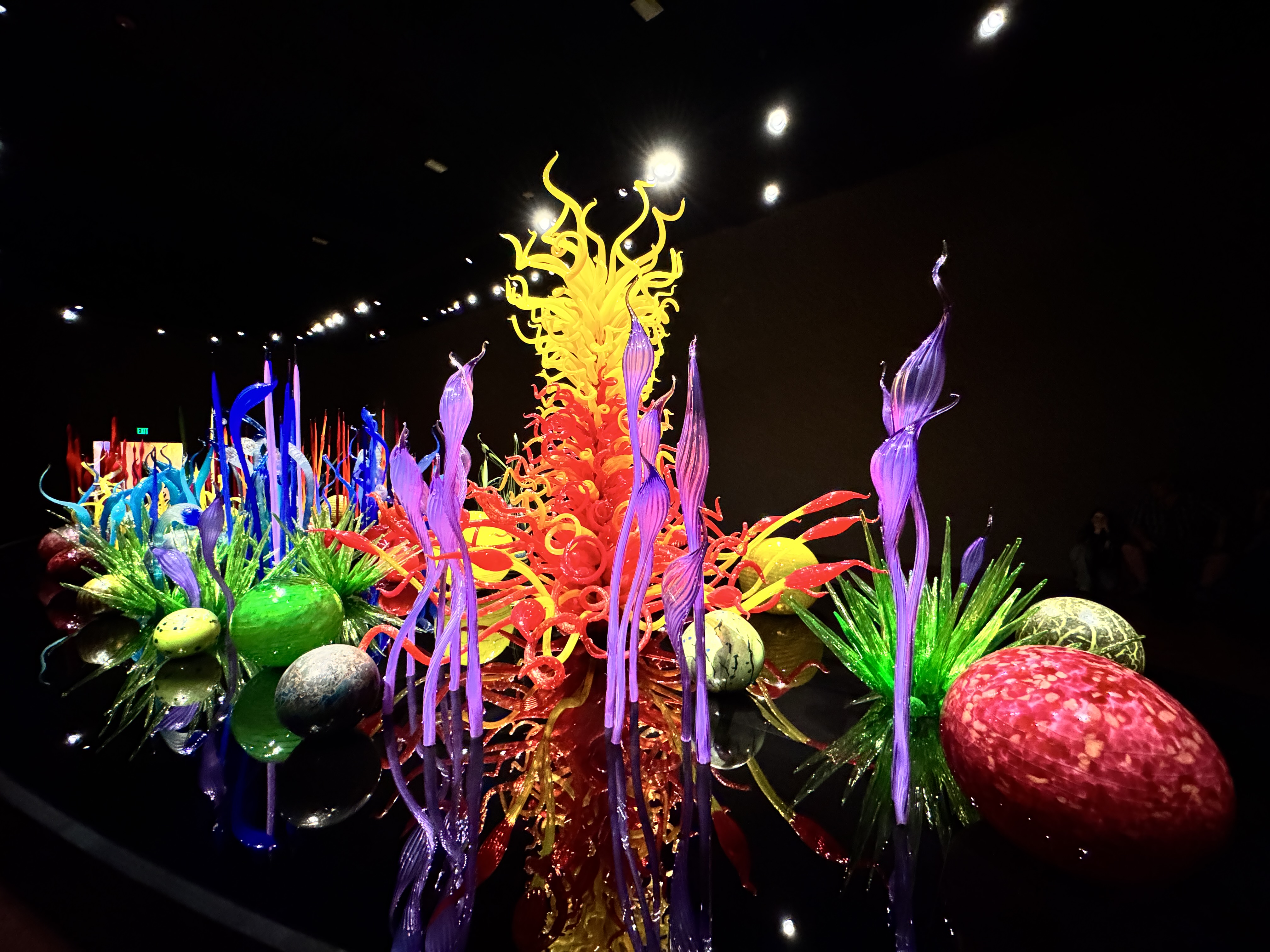
Every great adventure needs a good starting point, and for us that meant spending a day exploring Seattle before boarding our cruise.
We flew in the day before sailing… mostly because we didn’t want to risk any travel hiccups interfering with the cruise departure. Flights get delayed, connections get messy, summer travel can be unpredictable, and missing a cruise ship is not exactly an ideal way to start a vacation. Arriving the day before gave us the chance to slow down, settle into the city, and actually enjoy the beginning of the trip instead of racing straight from the airport to the port.
Seattle greeted us with that classic Pacific Northwest atmosphere… cool coastal air, ferries drifting across Elliott Bay, and the faint smell of saltwater hanging in the breeze. There’s something about being in a cruise port the day before sailing that just feels exciting. Suitcases roll down the sidewalks, travelers arrive from every direction, and you can feel the buzz of anticipation as thousands of people prepare to head off on their own adventures.
After checking into our hotel and dropping our bags, we headed to one of my favorite places in the city… the Chihuly Garden and Glass Museum.
If you’ve never been, it’s absolutely worth a visit. The museum showcases the work of world renowned glass artist Dale Chihuly, and the installations are unlike anything I’ve ever seen. Massive sculptures made entirely of blown glass twist and stretch into shapes that resemble giant sea creatures, glowing coral reefs, and delicate flowers suspended in midair.
The colors alone are mesmerizing… fiery oranges, deep ocean blues, brilliant yellows that almost appear to glow from within the glass itself. Some installations fill entire ceilings while others spill out into the garden outside, rising among the real plants like some kind of surreal glass ecosystem.
Walking through the exhibit feels less like visiting a museum and more like stepping into a living work of art.
At one point I joked that I would happily install several of those sculptures in my yard if someone would just deliver them… though I’m pretty sure my neighbors might have questions.
It was the perfect way to kick off the trip… something creative, beautiful, and uniquely Seattle.
Later that evening we grabbed dinner, wandered along the waterfront for a bit, and watched the lights of the city shimmer across the water. With the excitement of embarkation day ahead of us, we turned in early… knowing that by the next afternoon we’d be sailing north toward Alaska.
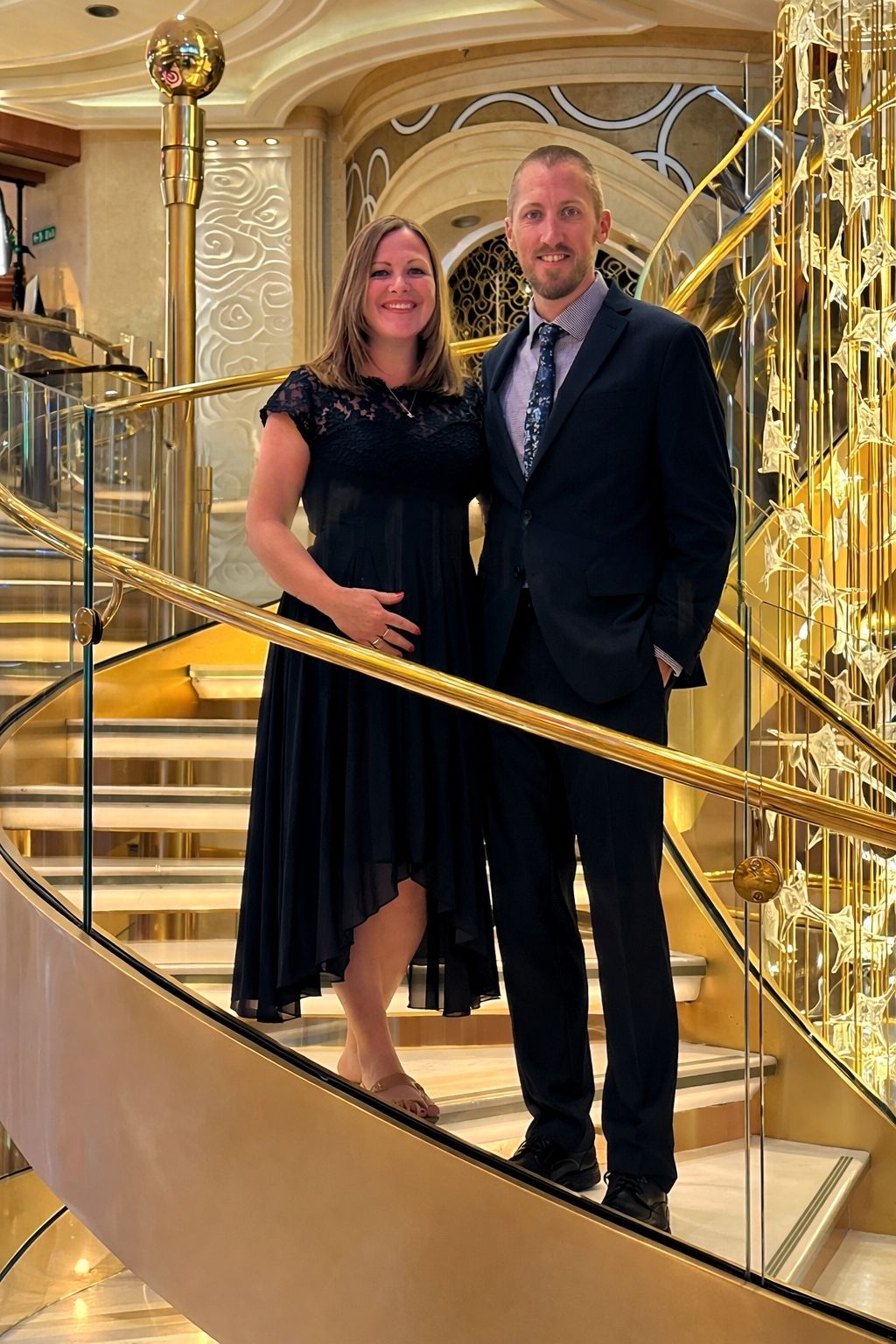
The next morning arrived with bright skies and cool coastal air… the perfect start to embarkation day.
This cruise ended up being a full family adventure. Jason’s parents, Jack and Janet, joined us for the trip, along with his oldest brother Erik, Erik’s wife Emily, and their son Zac. Traveling with family always adds another layer of fun… more people to explore with, more laughs at dinner, and usually at least one person getting talked into something they didn’t originally plan to do.
Heading to the cruise terminal was surprisingly smooth. Seattle handles Alaska cruise departures all summer long, and the whole system runs like a well oiled machine. Porters were waiting right outside to take luggage, check in moved quickly, and before long we were walking up the gangway and stepping aboard the Royal Princess.
Seeing the ship up close is always exciting, but this one felt especially massive. The Royal Princess towered above the dock like a floating city… decks stacked high above the waterline, balconies stretching endlessly along the sides.
Once we reached our stateroom, the first thing we did was step out onto the balcony.
The cool ocean air hit immediately and the Seattle skyline stretched behind us in the distance. That balcony quickly became one of our favorite spots on the entire ship. For an Alaska cruise especially, being able to step outside anytime for fresh air and scenery adds a whole new layer to the experience. At one point that balcony may have quite literally saved my life… but that’s a story for another section.
The afternoon was spent exploring the ship… wandering the decks, discovering restaurants and lounges, and getting our bearings in what felt like a floating resort.
Of course, exploring the food options was high on the list as well.
Cruise ships are famous for their endless dining options, and the Royal Princess was no exception. Fresh pizza coming out of the oven, burgers sizzling on the grill, seafood stations, dessert counters filled with cakes and pastries… it quickly became clear that nobody goes hungry on a cruise.
As sailaway time approached, passengers started gathering along the railings and upper decks, cameras in hand. There’s always a buzz in the air during those first moments when a cruise begins… a mix of excitement, anticipation, and the realization that real life has officially been put on pause for a while.
Then the horns sounded.
Deep, powerful blasts echoed across Elliott Bay as the ship slowly pulled away from the dock. Other ships in the harbor answered back with their own horns, and suddenly the entire waterfront felt alive with the sounds of departures and adventure.
We stood along the rail watching Seattle slowly drift away behind us.
The skyline stretched along the water, ferries crossing the bay, seaplanes buzzing overhead. The famous Space Needle stood tall above the city for a while longer before gradually shrinking into the distance.
Little by little the buildings became smaller… the harbor faded… and eventually the skyline disappeared altogether.
Ahead of us were glaciers, whales, mountains, and a full week of exploring Alaska.
That evening we enjoyed dinner in the dining room where Alaska’s seafood made its first appearance… rich salmon, roasted vegetables, and a warm bowl of seafood chowder that felt perfect in the cool northern air.
Later we caught a juggling show and stumbled into one of the ship’s lively game shows where the audience was laughing so hard people were wiping tears from their eyes.
By the time we stepped back outside onto the deck it was nearly 10pm… and the sky was still glowing with soft light.
That’s one of the strange and beautiful things about Alaska in July. The sun never really seems to set. Instead, the sky slowly fades into a long golden twilight that lingers late into the night.
Cold wind. Glowing sky. The open ocean stretching endlessly ahead.
The adventure had officially begun.
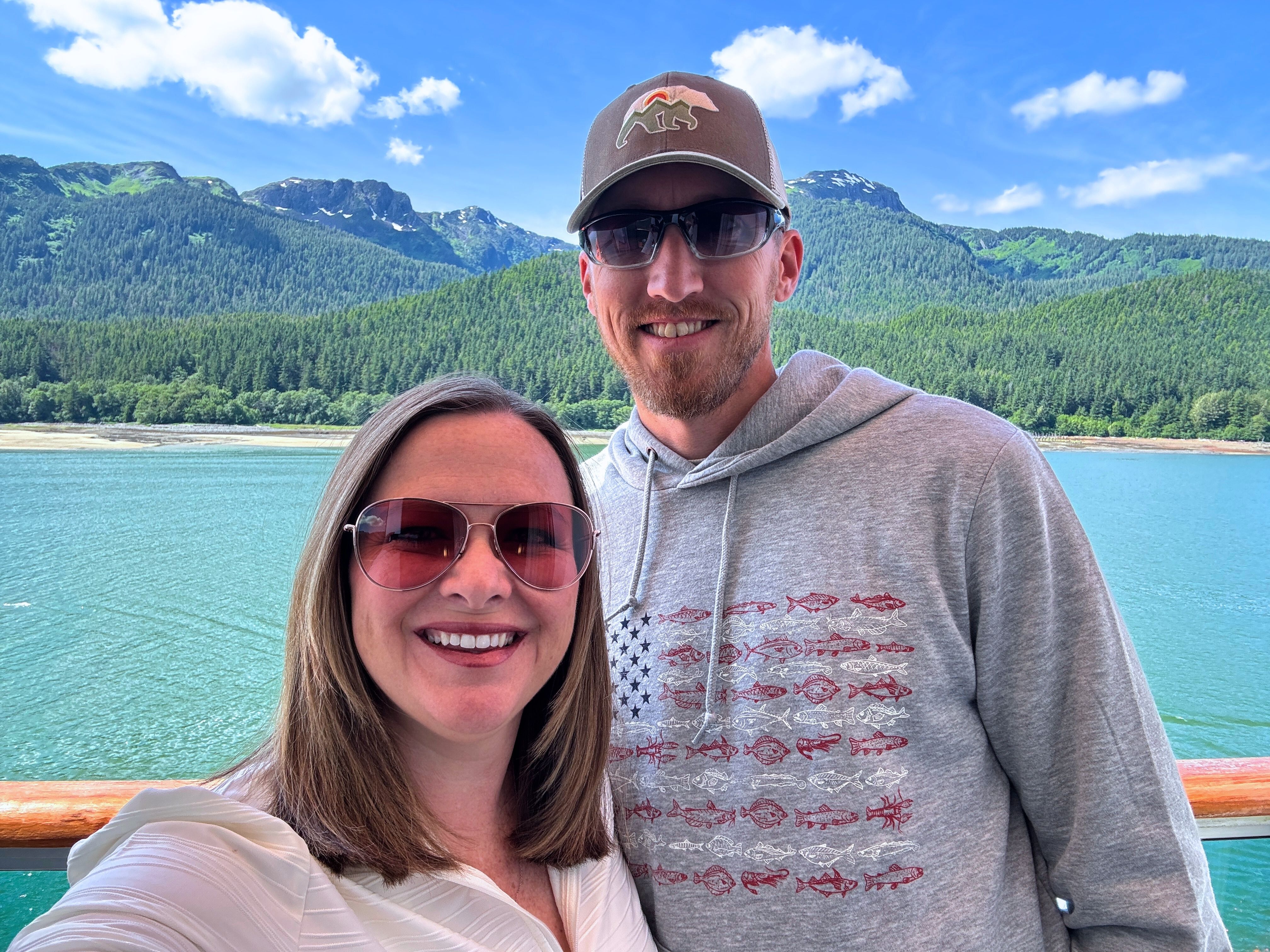
Some of the best moments were the simplest ones… standing quietly at the rail watching the water stretch endlessly to the horizon.
Every now and then you’d feel the ship gently rise and fall with the waves… just enough to remind you that you were traveling through the open ocean toward Alaska.
And every so often, the ship’s horn would sound.
It wasn’t the loud celebratory blast you hear during sailaway. This was different… a deep, low note that rolled out across the water and slowly echoed into the distance. At first it caught me off guard, but after a few days it became one of my favorite parts of being on the ship.
In Alaska, fog can roll in quickly, and maritime rules require ships to sound their horn regularly when visibility is low so other vessels can hear them through the mist. Sometimes that meant hearing the horn every couple of minutes as we moved through the water.
There was something strangely peaceful about it.
That deep sound drifting out across the ocean, fading into the quiet, felt like part of the rhythm of the journey… a reminder that we were traveling through a place where nature still sets the rules.
Our first full day at sea gave us time to settle into that rhythm of cruise life.
Sea days unfold slowly. There’s no rushing to catch excursions or watching the clock… just the gentle motion of the ship and endless ocean surrounding you in every direction.
At least… that’s the peaceful version.
The actual version for me started a little differently.
At some point during the night the ocean decided to remind me that we were, in fact, floating on a giant moving object. I woke up feeling like my inner ear had entered a disagreement with gravity. The ship wasn’t rocking wildly or anything dramatic… just enough movement to make my stomach start filing complaints.
Cue the emergency response plan.
Sea Bands went on. Dramamine appeared. Peppermint oil was deployed like some sort of nautical first aid kit. At one point I was lying on the bed staring at the ceiling wondering if I had made a terrible life choice.
Thankfully… the balcony saved me.
Stepping outside into the cold ocean air with the horizon in view helped almost immediately. Something about being able to see the water and feel the breeze settles everything down. From that moment on, that little balcony became my personal survival strategy for the rest of the trip.
Once the Dramamine kicked in and the ship stopped feeling like a mildly possessed washing machine, the day improved dramatically.
Breakfast quickly became one of my favorite rituals onboard. Strong coffee, flaky pastries, fresh fruit, made to order omelets, and smoked salmon while watching the waves roll past the windows.
Not a bad way to start the day.
The rest of the morning was spent wandering the ship… popping into trivia games, catching live music, exploring different lounges, and occasionally stepping outside onto the balcony to take in the crisp ocean air.
Sea days have a way of slowing everything down in the best possible way. There’s no strict schedule unless you want one. People read books, nap in deck chairs, watch the horizon, or spend hours just exploring different corners of the ship.
By evening the ship had taken on a completely different energy.
Formal night had arrived.
Passengers traded their poolside clothes for dresses, jackets, and polished shoes as everyone made their way toward the dining rooms. The entire ship suddenly felt a little more elegant… like stepping into a floating gala.
Dinner that night featured more incredible seafood… halibut, salmon, perfectly roasted vegetables, and a decadent dessert that may or may not have been ordered twice.
No judgment.
Later we headed to the theater for a show called Encore, a lively performance filled with music, big stage production numbers, and some seriously impressive vocals.
I will admit though… part of my attention was occasionally drifting toward the chandeliers hanging above the stage. Not because they weren’t beautiful, but because they were gently swaying with the motion of the ship… which was a reminder that my stomach and the ocean were still negotiating terms.
Thankfully the Dramamine held strong.
After the show we wandered into one of the ship’s game shows… a cruise version of Deal or No Deal where the audience was laughing nonstop. Somehow we even managed to win a little money along the way.
Not a bad way to spend a night at sea.
By the time we stepped back outside onto the deck that night the air had turned crisp and the sky was glowing with the long northern twilight.
Alaska was getting closer.
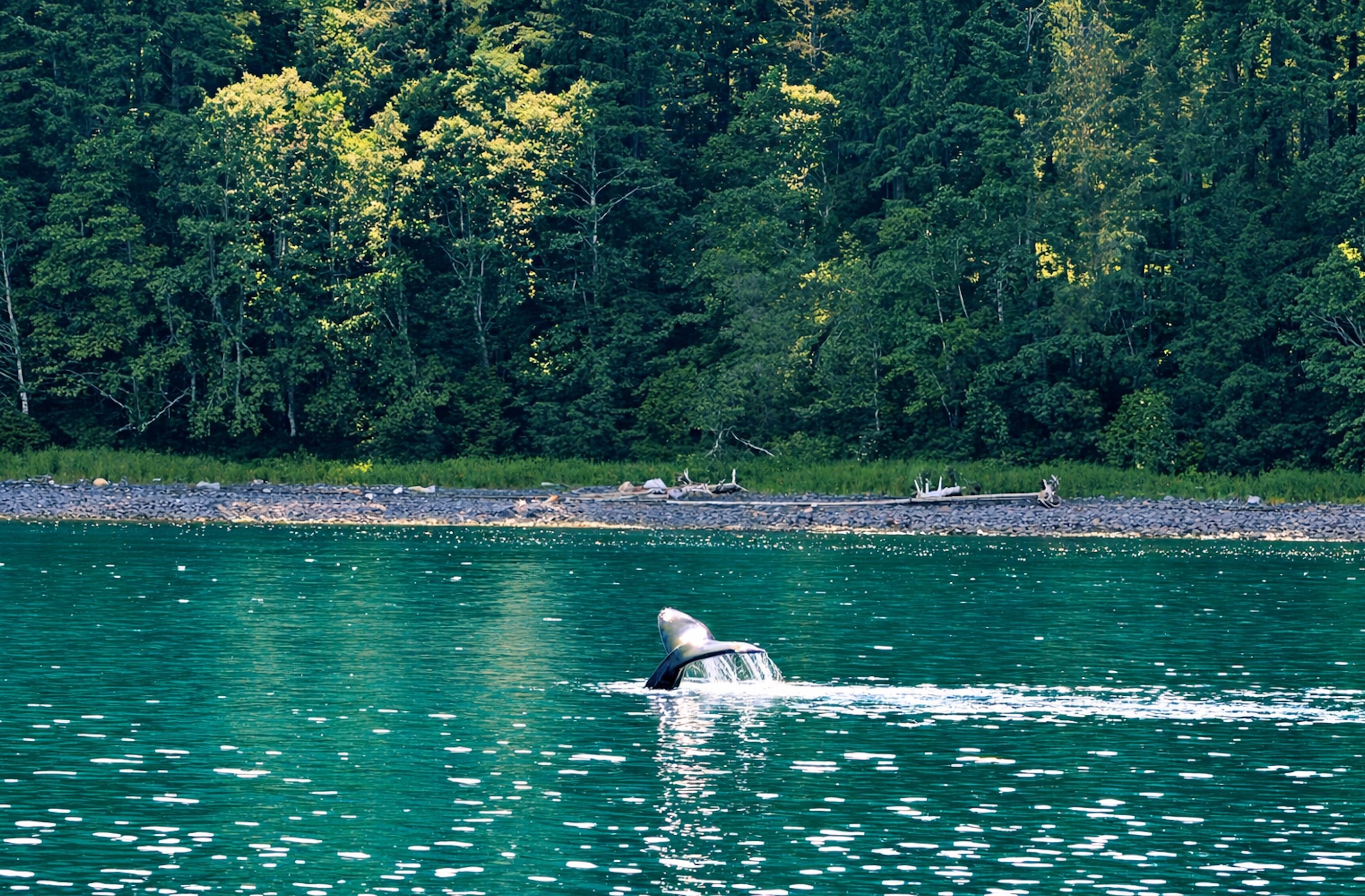
Our first Alaskan port was Juneau, the capital city tucked between towering mountains and the icy waters of the Inside Passage. As the Royal Princess slowly approached the harbor that morning, passengers lined the railings and balconies watching the landscape come into view.
Colorful buildings hugged the waterfront, fishing boats drifted quietly in the harbor, and steep forested mountains rose straight up behind the town like a giant green wall. Somewhere beyond those mountains sits the famous Mendenhall Glacier… one of the most visited glaciers in Alaska… but even without seeing it yet, it already felt like we had arrived somewhere wild.
When we stepped off the ship we were greeted by bright sunshine… something locals quickly told us not to get used to. Southeast Alaska is known for its misty skies and frequent rain, and apparently a string of sunny days like this is pretty rare.
Apparently we had timed it just right.
We weren’t complaining.
The mountains surrounding the harbor were covered in thick evergreen forests that seemed to stretch endlessly up the slopes, and the air had that crisp, cool freshness you only get near cold ocean water and glaciers.
Juneau sits along the Inside Passage, a network of protected waterways carved by massive glaciers thousands of years ago. These deep, cold waters are packed with nutrients, which makes the region one of the best feeding grounds in the world for humpback whales during the summer months.
That’s exactly why we were there.
That morning we headed out on a whale watching excursion… and it quickly turned into one of the most memorable experiences of the entire trip.
Not long after leaving the harbor someone spotted movement on the water.
A humpback whale surfaced just ahead of the boat.
Its massive dark back rolled slowly through the water before disappearing beneath the surface again. A moment later the tail lifted high into the air… that iconic fluke shape silhouetted against the sunlight… before slipping quietly back beneath the waves.
Cameras started clicking instantly.
Then someone spotted another one farther out.
And another.
Soon we realized whales were surfacing all around us. Every few minutes another blow would appear across the water… a puff of mist rising from the surface before a dark shape rolled gently through the waves.
Watching humpback whales in the wild is completely different than seeing them on TV. They’re enormous… far larger than you expect… yet they move with this slow, graceful rhythm that makes the entire ocean feel calm.
At one point nearly the entire boat leaned over to the same side trying to get a better view of a whale that had surfaced nearby. It felt a little like a floating game of “everyone run to the window,” except the window happened to be the open ocean and the thing we were watching weighed about forty tons.
Along the rocky shoreline we spotted harbor seals lounging on the rocks while bald eagles soared overhead, occasionally swooping down toward the water.
The whole place felt alive… whales feeding below the surface, birds gliding through the air above, seals resting along the edges of the bay.
Standing there surrounded by mountains, wildlife, and open ocean, it was one of those moments where everything just slows down for a second.
You stop talking.
You stop checking your phone.
You just watch.
And I remember thinking the same thing over and over again…
This is Alaska.
Eventually the boat turned back toward the harbor and our whale watching adventure came to an end, but the day was far from over.
While the rest of the family continued exploring around town, Jason and I followed the smell of butter and seafood toward one of the most famous little spots in Juneau… Tracy’s King Crab Shack.
If you’ve ever looked into Alaska cruises, you’ve probably heard of this place. It’s a small waterfront crab shack that has become almost legendary for serving some of the freshest king crab you can find anywhere.
The setup is simple. You order at the counter, grab a tray of crab legs, and find a seat at one of the picnic tables overlooking the harbor while fishing boats drift by.
So naturally… we ordered a lot.
By the time we were done, Jason and I had worked our way through roughly two hundred dollars worth of crab legs.
No regrets.
We tried both red king crab and golden king crab, piled high on trays with melted butter and giant crackers for breaking them open. The legs were massive, the meat was sweet and tender, and every bite tasted like the ocean in the best possible way.
There’s something oddly satisfying about sitting outside at a wooden picnic table, cracking open giant crab legs with your hands while watching fishing boats pass through the harbor.
No fancy presentation.
No white tablecloths.
Just ridiculously good seafood and a growing mountain of empty crab shells.
Jason and I ended up laughing our way through the entire meal, completely covered in butter and crab juice like two very happy tourists with absolutely zero self control when it comes to fresh seafood.
It ended up being one of the unexpected highlights of the entire trip.
Sometimes the best travel moments aren’t the big excursions or famous landmarks.
Sometimes it’s just sitting at a tiny crab shack by the water… eating the best seafood of your life with the love of your life.
And Tracy’s definitely lived up to the hype.
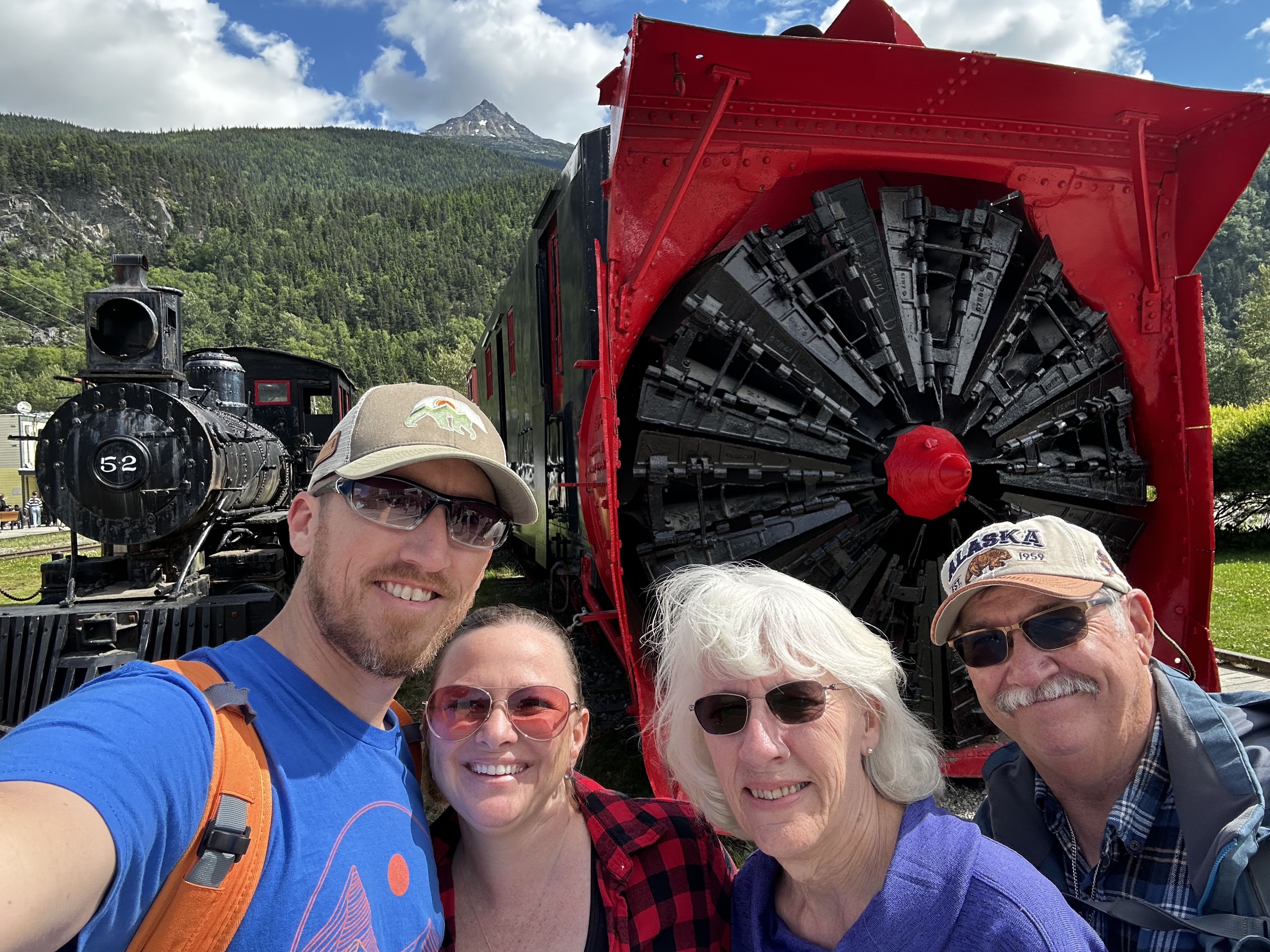
Our next stop brought us to Skagway… a tiny town tucked between towering mountains that feels like it was pulled straight out of a history book.
The day started with a tender ride from the ship to shore, which always adds a little adventure to the morning. Small boats ferried passengers back and forth across the harbor while the Royal Princess sat anchored in the bay, surrounded by steep mountains and calm northern water.
As we approached the dock, Skagway looked almost frozen in time.
Colorful wooden storefronts lined the streets, boardwalk sidewalks stretched along the buildings, and the jagged peaks of the Coast Mountains rose dramatically behind the town like a natural wall. It’s the kind of place that immediately feels historic, even before you learn the story behind it.
And Skagway has quite a story.
When gold was discovered in the Yukon in 1897, thousands of hopeful prospectors flooded into this tiny port chasing dreams of striking it rich. Almost overnight the town exploded from a single cabin into a chaotic boomtown filled with saloons, supply stores, hotels, and fortune seekers from all over the world.
Within just a few months the population grew to more than 8,000 people.
But reaching Skagway was only the beginning.
To reach the gold fields in the Yukon, miners had to cross the Coast Mountains carrying nearly a ton of supplies each… food, tools, clothing, and equipment required by Canadian authorities before they were even allowed to continue. Most attempted either the brutal Chilkoot Trail or the White Pass Trail, hauling their gear step by exhausting step through snow, ice, and steep mountain terrain.
Standing there looking up at those mountains, it’s hard not to feel respect for the sheer determination those miners must have had.
And meanwhile I was over here annoyed that my excursion got canceled.
Originally, Jason and I had booked a guided photography rafting trip that would have taken us down one of the nearby rivers. The idea was to float quietly through the wilderness photographing wildlife along the riverbanks… and I was especially excited about the possibility of spotting bears along the shoreline.
That had been the plan I was really looking forward to.
Unfortunately, the small boat that was supposed to take us to the rafting location had a mechanical issue that morning, and the excursion had to be canceled.
So we pivoted.
After wandering through some of the quirky shops and galleries downtown, we stopped for lunch at a local place called The Sitting Sasquatch. It was one of those relaxed little spots that feels perfectly at home in a town like this… casual, welcoming, and full of personality.
After several days of seafood, a good burger and fries tasted pretty great.
From there we headed toward the backup plan for the afternoon… the White Pass and Yukon Route Railway.
This historic train line was built in 1898 during the height of the gold rush and is still considered one of the most scenic railways in the world. The narrow gauge railroad climbs nearly 3,000 feet into the mountains along a route that once challenged thousands of prospectors on foot.
Constructing the railway itself was an incredible feat of engineering. Workers blasted tunnels through solid rock, carved narrow ledges into sheer cliffs, and built wooden trestle bridges that still cling to the mountainsides today.
Once the train began climbing out of Skagway, the views quickly became breathtaking.
The track winds along the mountainside with dramatic drop offs revealing deep valleys far below. Waterfalls tumble down steep cliffs, snow patches cling stubbornly to the higher peaks, and miles of untouched wilderness stretch in every direction.
At times the train curves so sharply that you can see the entire line of cars snaking along the ridge ahead of you.
It’s the kind of scenery that makes you put your camera down for a moment just to take it all in.
Now… the honest part.
The views really are beautiful. But living in Colorado, we’re already pretty spoiled when it comes to mountain scenery. So while the train ride was definitely cool and full of fascinating history, part of me still found myself thinking about that river… and the bears I might have photographed instead.
If you’re someone who loves wildlife and getting a little farther off the beaten path, I’d probably recommend looking into excursions like that when they’re available. Experiences that get you out into the rivers and forests can sometimes give you an even deeper feel for Alaska.
That said, the train still delivered some incredible views and a fascinating glimpse into the history of the gold rush.
And sometimes travel works like that… you plan one thing, the day takes a different turn, and you end up experiencing something completely different.
As we climbed higher into the mountains, the air grew cooler and the landscape shifted from dense green forest to rugged alpine terrain. In some places you can still see remnants of the old gold rush trails where prospectors once struggled to drag their supplies across the mountains.
Looking out across that vast wilderness, it’s impossible not to imagine what those early travelers must have faced.
The train eventually reached the summit where we paused briefly before beginning the journey back down toward Skagway. On the return trip the views somehow felt even more dramatic… sunlight catching the waterfalls, shadows stretching across the valleys below, and the tiny town of Skagway slowly appearing again in the distance.
By the time we stepped off the train it felt like we had traveled not just through the mountains, but through a piece of history.
We made our way back toward the harbor just in time to catch the tender back to the ship… cutting it a little closer than planned as we hurried down the dock.
Looking back toward town from the water, Skagway appeared just as it had when we arrived… a small, colorful frontier town sitting quietly beneath massive mountains.
A tiny place with a surprisingly big story.
The morning started in the most unexpected way.
Before we even realized where we were, the first thing we noticed were sea otters.
Everywhere.
Jason and I had stepped out onto our balcony early that morning, coffee in hand, expecting the usual open ocean views… and instead we started spotting little brown shapes floating in the water below.
At first it was just one drifting past the ship.
Then another.
Then suddenly we realized there were dozens of them scattered across the bay.
And then we looked closer.
There weren’t dozens.
There were hundreds.
Sea otters were floating all over the water in large groups called rafts, drifting along on their backs like they were having the most relaxing morning imaginable. Some were holding hands so they wouldn’t float apart while they slept. Others rolled lazily through the water or munched on shellfish like they had absolutely nowhere to be that day.
Honestly… they seemed to have life pretty well figured out.
While we were standing there watching them, we noticed something else darting across the water.
Puffins.
Tiny black and white birds with bright orange beaks zipped low across the surface like miniature torpedoes before suddenly disappearing beneath the water to hunt for fish. They moved so fast it almost felt like watching little cartoon birds bouncing across the waves.
It was one of those quiet moments where you start realizing you’re somewhere special.
And then we looked up.
Towering mountains surrounded the ship on all sides. Their peaks were dusted with snow even in the middle of July, and the water had taken on that deep blue green color that only glacial waters seem to have.
Floating chunks of ice drifted slowly through the bay like scattered pieces of glass.
That’s when it finally hit us.
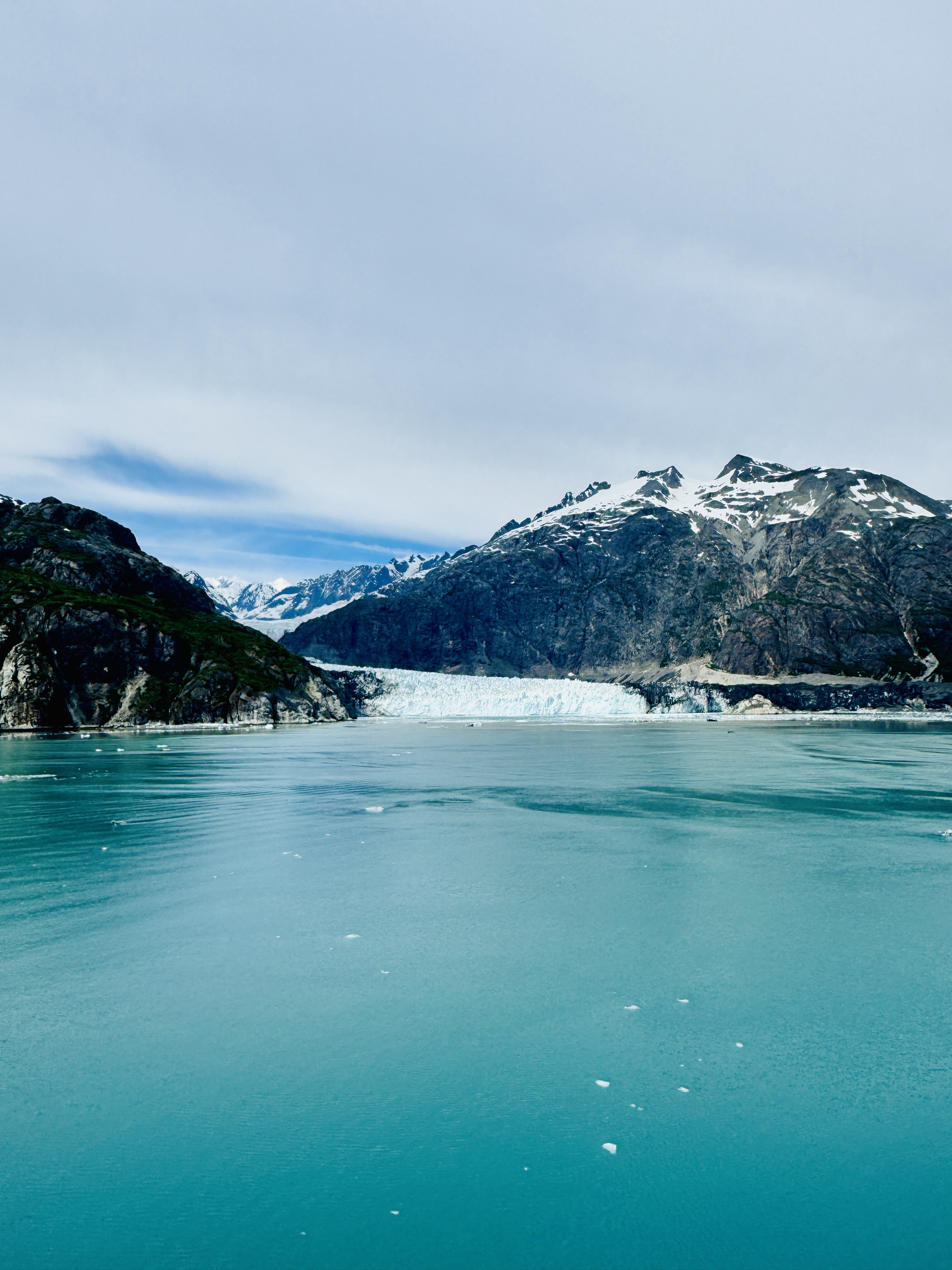
We were in Glacier Bay National Park.
At some point during the early morning hours the Royal Princess had quietly entered the park, and the entire landscape around us had completely transformed.
Glacier Bay itself is still relatively young in geological terms. Just a few hundred years ago the entire bay was completely filled with a massive glacier that stretched all the way to the ocean. Since the late 1700s that ice has retreated more than sixty miles, slowly revealing the dramatic fjords and valleys that ships sail through today.
And the glaciers here are still moving.
Later that morning the ship slowly made its way deeper into the bay toward the largest and most impressive glacier in the area… Margerie Glacier.
Even from far away it looked enormous, but as the Royal Princess eased closer the scale of it became almost impossible to grasp. The glacier stretches more than a mile across and rises roughly 200 feet above the waterline… and what you see above the surface is only a fraction of the ice. Much of the glacier actually extends deep below the water.
The color of the ice was incredible.
Layers of bright white and deep electric blue stacked together like frozen waves, carved and compressed over centuries. Some sections looked almost translucent where the ice had been squeezed so tightly that all the air bubbles were pushed out, allowing the blue tones to shine through.
It looked less like frozen water and more like a giant sculpture carved by time itself.
The ship slowed to a near stop while everyone gathered along the railings and balconies to watch.
At first it was quiet.
Every now and then we would hear a sharp cracking sound echo across the bay… like a loud crack of lightning and distant thunder rolling through the mountains.
And then it happened.
A massive chunk of ice broke away from the face of the glacier and crashed into the water below with a thunderous splash. The sound echoed across the bay and sent waves rippling outward from the impact.
Everyone on the ship cheered.
That process is called calving… when pieces of glacier break off and fall into the ocean. It happens naturally as the glacier slowly moves forward, and when you see it in person the sound and scale of it are far more dramatic than you expect.
We watched it happen several more times while the ship slowly rotated so both sides could get a good view.
Meanwhile the wildlife continued to put on a show around us.
Sea otters continued to float past in the distance, harbor seals lounged on floating pieces of ice like they owned the place, and every now and then we spotted more puffins darting across the water.
And somehow the weather continued to cooperate.
Bright sunshine reflected off the glacier face, lighting up the ice with shades of blue that looked almost unreal. For a place known for fog and rain, Glacier Bay seemed determined to show off that day.
And as if the day couldn’t get any better…
It also happened to be my birthday.
I’m not sure many people get to celebrate their birthday surrounded by glaciers, sea otters, puffins, and whales… but I have to say, it set the bar pretty high for future birthdays.
Later that evening the ship surprised me with a birthday cake at dinner so we could celebrate with our family. It was one of those simple moments that makes a trip feel extra special… good food, good company, and the kind of memories that stay with you long after the trip is over.
By the time the Royal Princess slowly turned and began sailing out of Glacier Bay, everyone on deck seemed to be soaking in the last views of the glaciers fading into the distance.
It had easily been one of the most incredible days of the entire cruise.

Our next stop brought us to Ketchikan… a colorful little fishing town tucked along the southern edge of Alaska’s Inside Passage.
Unlike some of our other ports, this one was a quick visit. We docked early that morning with a firm all aboard time of 12:45, which meant our time in town would be short but still packed with things to see.
As the Royal Princess pulled into port, the first thing you notice about Ketchikan is how closely the town hugs the water. Buildings sit right along the shoreline, many of them perched on wooden pilings over the harbor, with steep green mountains rising immediately behind them.
It’s a town shaped by fishing, rain, and the surrounding wilderness.
Ketchikan is often called the Salmon Capital of the World, and it sits in the heart of the Tongass National Forest… the largest national forest in the United States. The Tongass stretches across nearly 17 million acres of temperate rainforest filled with towering spruce, hemlock, and cedar trees. Between the dense forest, the surrounding ocean, and the countless rivers and creeks flowing through the region, it’s one of the richest ecosystems anywhere in North America.
Even before we stepped off the ship, we started noticing something interesting in the water.
Jellyfish.
Tons of them.
Looking down from the dock and the harbor walkways you could see them slowly drifting through the water. Some were small, almost transparent moon jellies gently pulsing through the currents. Others were larger lion’s mane jellyfish with long trailing tentacles floating like delicate underwater ribbons.
They move slowly, almost hypnotically, just drifting wherever the currents take them.
Which made our first stop in town even funnier.
Our morning started with an important mission… donuts and coffee.
We made our way to a quirky little local spot called Jellyfish Donuts, which has become somewhat famous in town for their creative flavors. Yes… they are actually known for a salmon donut, which I was not quite adventurous enough to try.
But the donuts we did try were fantastic.
Warm, fluffy, perfectly sweet, and exactly what we needed to kickstart a busy morning of exploring.
And because Alaska likes to keep things interesting… these donuts are also made with jellyfish powder.
Yes, actual jellyfish.
Before you start imagining something slimy in your breakfast, it’s actually not as strange as it sounds. Jellyfish can be dried and ground into a very fine powder that’s almost completely flavorless. It’s sometimes used in small amounts for texture and nutritional value since jellyfish are rich in collagen and protein.
So no… the donuts do not taste like seafood.
They just taste like really good donuts.
Still, it may be the only time in my life I can say I’ve eaten jellyfish before 9am… while also watching hundreds of them floating around in the harbor outside.
Only in Alaska.
Fueled by sugar and caffeine, we wandered through the streets popping into little souvenir shops and art galleries along the waterfront. Totem poles seemed to be everywhere… towering carvings outside museums, smaller ones displayed in shop windows, and beautifully detailed pieces created by local artists.
Totem poles are deeply connected to the cultures of the Native peoples of this region, particularly the Tlingit, Haida, and Tsimshian tribes. Each carving tells a story through symbols representing family history, animals, legends, or important events.
They’re incredibly detailed, incredibly beautiful… and often incredibly expensive.
But after admiring several of them around town, we did end up finding a smaller one that was a bit more affordable but just as beautifully carved. Of course we couldn’t resist bringing it home with us, and it now sits proudly in our music room as a little reminder of this trip.
From there we made our way to the Southeast Alaska Discovery Center, which focuses on the ecosystems, wildlife, and Native cultures of the region. It turned out to be one of those places that surprises you in the best way.
The exhibits walk visitors through the rainforest ecosystems of the Tongass… from salmon migrations and coastal wildlife to the towering forests that dominate much of Southeast Alaska.
One of the coolest things about Ketchikan is that salmon literally run through the creeks right in town during the right time of year. Standing along the bridges you can sometimes watch them swimming upstream toward the forests where they were born.
Nature just casually doing its thing… right in the middle of town.
At one point we also spotted an enormous yacht anchored nearby that turned out to belong to J.K. Rowling… and yes, she was actually confirmed to be in town at the same time we were. The yacht even had its own helipad, which made the rest of us feel like we might be vacationing on slightly different budgets.
Our time in Ketchikan passed quickly, and before long it was time to make our way back toward the ship.
Some of the family continued exploring a bit longer, but my body decided it was time for a short reset… so I headed back onboard for a quick nap before the evening’s activities began.
Sometimes you just have to listen to your body… especially when it’s still adjusting to life on a moving ship.
Later that evening the fun continued back on board.
Dinner was followed by a Motown show called Sweet Soul, which turned out to be one of the best performances of the cruise. Incredible music, powerful vocals, and the kind of songs that have the entire audience tapping their feet.
After the show we bounced between a couple of the ship’s game shows that had the entire room laughing.
At some point during all of this I also learned that I apparently have something called a callipygian.
Which I will absolutely not be explaining here.
Just know I was laughing so hard I could barely breathe.
Cruise entertainment has a funny way of turning a room full of strangers into a cheering section for the most ridiculous competitions imaginable… and somehow that ends up being half the fun.
Tomorrow would bring our final stop before returning to Seattle… Victoria, British Columbia.
Our final port of the cruise brought us to Victoria, British Columbia… and unlike the other stops, we didn’t arrive until the evening.
Most of the day had been spent enjoying the ship. It was one of those rare cruise days where there wasn’t any rush to get off first thing in the morning. We wandered through a few shows, laughed our way through some of the ship’s game shows, and eventually found ourselves back on deck doing a little more whale watching as the coastline of Vancouver Island slowly came into view.
At one point we spotted two orcas in the distance.
The light reflected off their dark backs and tall dorsal fins as they surfaced briefly before disappearing again into the waves. They were far enough away that I couldn’t get a clear photo… which is slightly tragic when you’re the person on the trip carrying the camera everywhere.
So while I don’t have photographic proof, I’m pretty confident in the identification.
You’ll just have to take my word for it.
As evening approached, the wind started picking up and the waves grew noticeably rougher. The captain eventually came over the loudspeaker advising passengers to secure loose items and be cautious on the upper decks.
Thankfully I had learned my lesson earlier in the week and was already ahead of the game with Dramamine.
By the time we docked in Victoria the sun was beginning to fade and the harbor looked absolutely beautiful. Historic buildings lined the waterfront, soft lights reflected off the water, and flowers seemed to be everywhere.
Victoria immediately felt different from the Alaskan ports… a little more European, a little more polished, and full of old world charm.
We didn’t actually have a plan for the evening.
Jason, Emily, Zac, and I stepped off the ship thinking we’d probably just wander around the harbor for a bit and see what caught our attention. Jack, Janet, and Erik decided to stay back on the ship and relax for the evening.
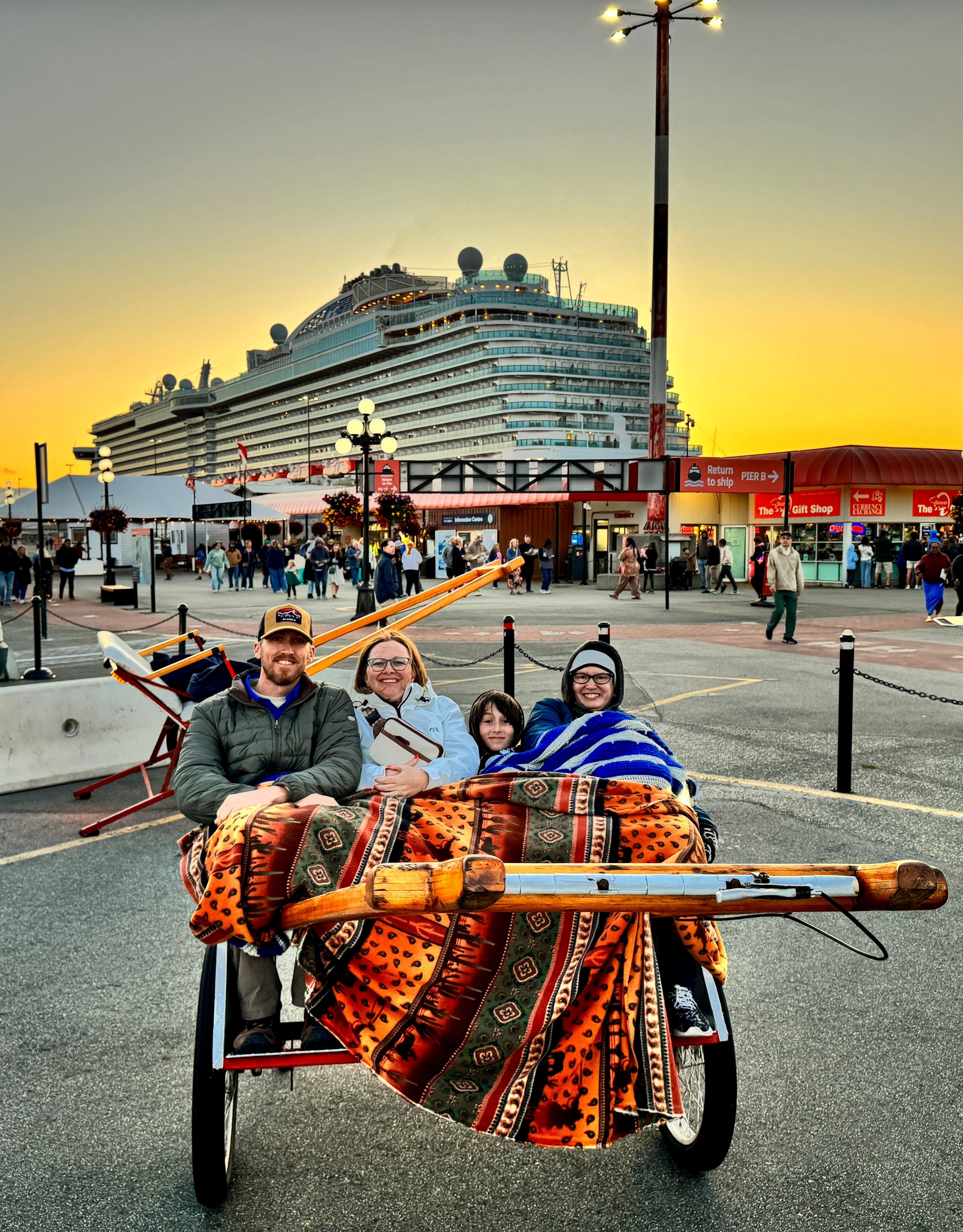
As we walked through the port area, several small excursion stands were set up offering quick city tours. One of the drivers caught our attention and started telling us about his rickshaw tours through downtown Victoria.
We all kind of looked at each other and shrugged.
Why not?
None of us had ever done a rickshaw ride before, and Zac immediately thought it was the coolest thing ever.
Honestly… the adults were just as excited.
So we climbed in, got bundled up in a pile of blankets, and off we went.
And when I say “we went,” I mean this man literally ran us all around the city while pulling the rickshaw behind him.
Every so often he would stop, set us down for a moment to catch his breath, and then start telling us stories about the city… pointing out historic buildings, gardens, government buildings, and bits of local history along the way.
Then he would hop back in, lean forward, and start running again.
It was impressive… and also slightly guilt inducing watching someone work that hard while we were just sitting back enjoying the ride.
At one point he stopped at a small liquor store and suggested we grab some local beer from one of the breweries in Victoria. Naturally we took his advice.
So there we were… four tourists wrapped in blankets, sipping ice cold local beer while being pulled through the streets of Victoria on a very chilly evening.
It was hilarious.
And surprisingly one of the highlights of the entire trip.
Before heading back toward the harbor we made a stop at Roger’s Chocolates, one of Victoria’s most famous historic shops.
Founded in 1885 by Charles “Candy” Rogers, it’s considered the oldest chocolate company in Canada and stepping inside feels like walking straight into another era. The shop is filled with rich dark wood, vintage displays, glass cases packed with handcrafted chocolates, and the unmistakable smell of cocoa the moment you walk through the door.
Rogers himself was known to be extremely particular about how his chocolates were made. He and his wife even lived above the shop, and local stories say he kept a very close eye on the kitchen below to make sure every recipe was followed exactly the way he intended.
Some versions of the story say he even cut small openings in the floor so he could spy on the chocolate makers to ensure no one experimented with recipes he didn’t approve of.
Over time, his behavior reportedly became more and more paranoid… which locals sometimes link to a historical condition known as Mad Hatter disease.
In the 1800s, hat makers often used mercury in the process of treating felt hats. Long term exposure to mercury fumes could cause neurological symptoms like tremors, mood swings, paranoia, and personality changes. It’s the same phenomenon that inspired the phrase “mad as a hatter.”
While historians don’t know exactly how much truth there is to that connection in Rogers’ case, the story has become part of the local folklore surrounding the shop.
And like any good piece of folklore, the story doesn’t quite end there.
Many locals believe Rogers’ spirit still watches over the shop today.
Employees have reported hearing footsteps after closing, seeing things move on their own, or feeling like someone is watching from the upper level of the building. Ghost tours in Victoria almost always include the chocolate shop as one of their stops.
The running joke is that Rogers was such a stickler for quality that he never actually left.
There’s even a playful tradition that says you shouldn’t open your chocolate until you’ve stepped outside the store… just in case Mr. Rogers is still keeping an eye on things.
Naturally we still bought chocolate.
Because haunted or not… chocolate is chocolate.
By the time we made our way back to the harbor, the city lights were shimmering across the water and passengers were slowly returning to the ship after their evening adventures.
Victoria had completely stolen my heart in just a few short hours. It’s the kind of place that makes you immediately think… I need to come back here someday and spend more time wandering these streets.
That night the Royal Princess quietly slipped away from the harbor and began the overnight journey back toward Seattle.
By morning we would be back where our journey started, bringing the Alaska cruise portion of our adventure to a close. While Jason and I continued traveling for a few more days exploring Olympic National Park, that part of the trip deserves its own story.
For now, our time sailing through Alaska had come to an end… and what an incredible week it had been.
From whales and glaciers to historic gold rush towns, unforgettable meals, and a few spontaneous adventures along the way, Alaska proved to be every bit as wild, beautiful, and memorable as we had hoped.
And like most great trips… it left us already wondering when we might come back.
Alaska has a way of quieting everything.
The noise. The hurry. The constant feeling that you should be doing one more thing, answering one more message, checking one more box.
Out there, none of that seems to matter much.
Towering mountains rise straight out of icy water. Glaciers stretch for miles, cracking and shifting with sounds that echo through entire valleys. Wildlife appears without warning… whales surfacing beside your boat, bald eagles gliding overhead, otters drifting on the surface like they’ve got absolutely nowhere to be.
It’s wild in the truest sense of the word.
Not manufactured. Not polished. Not trying to impress anyone.
Just raw, beautiful wilderness that has been shaping itself for thousands of years… with or without us.
Some of my favorite moments of the trip weren’t even the big ones. They were the quiet ones. Standing on our balcony with Jason watching the Inside Passage glide by. Seeing humpback whales surface around our boat in Juneau. Cracking open piles of king crab with butter running down our hands in a tiny harbor shack. Laughing under blankets while a rickshaw driver sprinted us through the chilly streets of Victoria.
Travel has a funny way of doing that.
You remember the places, of course… but it’s the moments that stay with you.
Alaska gives you both.
There’s a peacefulness there that’s hard to explain until you experience it. The air feels different. The water feels older somehow. The wildlife reminds you that we are visitors in a place that still belongs very much to nature.
And standing in front of glaciers that have existed longer than our country… watching whales surface in waters carved by ancient ice… it’s hard not to feel something shift in you.
Not in a dramatic, life falls apart and comes back together kind of way.
Just a quiet, steady reminder.
A reminder that the world is still full of wonder.
A reminder that beauty doesn’t have to shout to be powerful.
A reminder to slow down long enough to notice what’s right in front of you.
That’s what Alaska gave me.
Not just memories… though it gave plenty of those.
It gave me perspective.
And when a place can do that… you know it’s something special.
❤️ - Daniell Hagan
Because memories don’t make themselves.